

5 Surprising Truths About the 'Blood of the Grape' in Scripture
1. Introduction: The Fermentation of the Soul
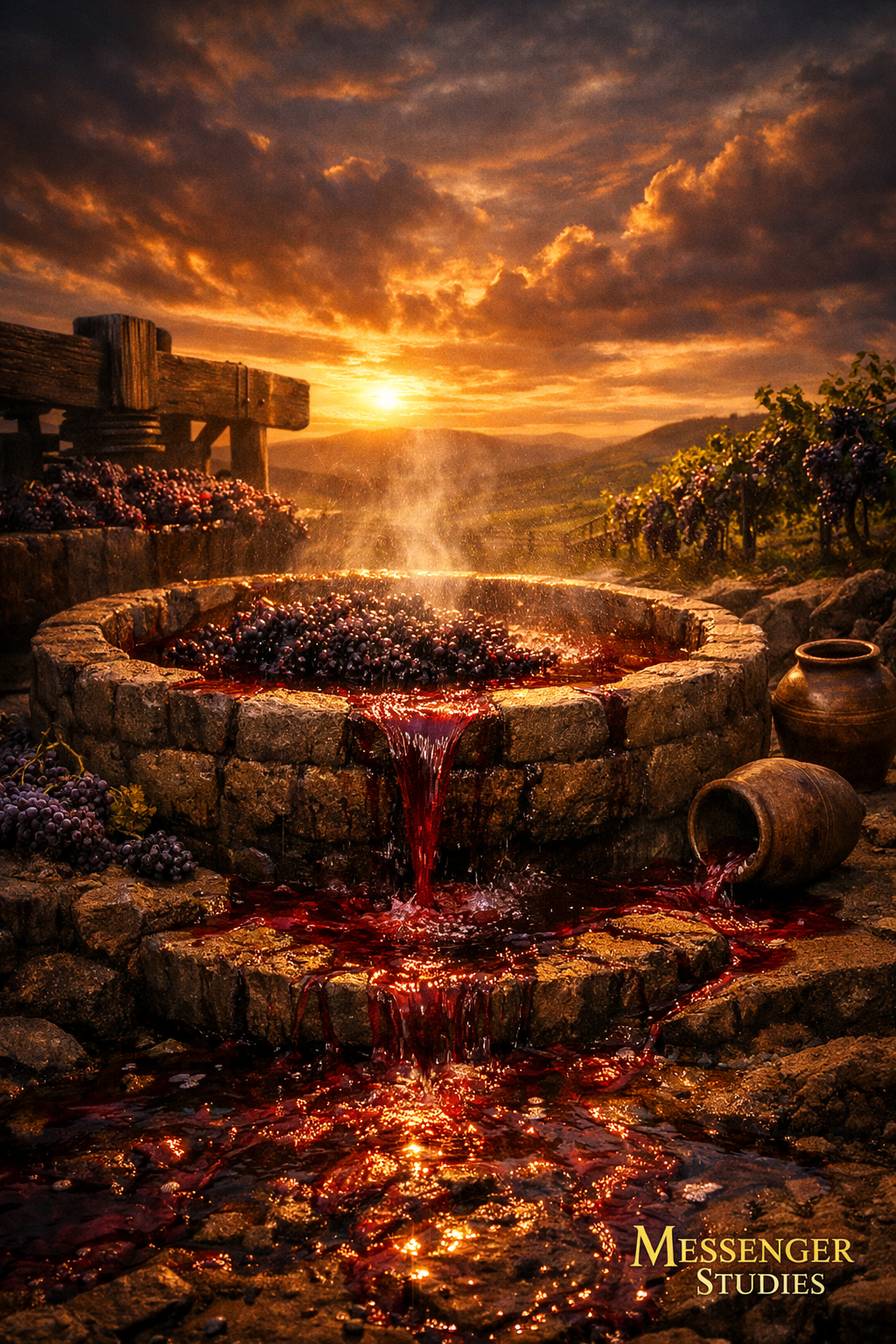
In the modern landscape of faith, wine often serves as a point of contention, trapped between the rigidity of total prohibition and the casualness of modern celebration. However, through the lens of a Biblical Hebraic scholar, wine, yayin, is far more than a beverage; it is a profound symbol of the transformative process. In the Hebraic worldview, nothing is static. To understand yayin is to understand a journey where the "blood of the grape" is extracted through the violence of the winepress and matured through the silent discipline of time. This raises a pivotal question for the student of the Word: Why would the Messiah, the very Word made flesh, choose to identify His life-force and the New Covenant with the "fruit of the vine"?
2. The Duality of Transformation—Blessing and Mocker
Scripture presents yayin with a striking duality, manifesting as both a sign of ultimate favor and a catalyst for divine judgment. This is rooted in the functional role of fermentation (chamets) within the Hebraic economy. Far from being a mere chemical reaction, chamets represents the maturation of the soul under pressure.
On one hand, wine is a primary blessing. In Genesis 27:28, Yahweh promises "plenty of grain and wine" as a tangible sign of His favor. Yet, Proverbs 20:1 warns that it is a "mocker" when misused. This duality requires the "elder to exercise discernment," recognizing that the same substance which gladdens the heart can also lead to the folly of the unrefined. The pressure of the fermentation process mirrors the human experience; just as the grape must be crushed to release its essence, the believer is often refined through the pressures of life, producing either the sweet wine of maturity or the sour vinegar of a hardened heart.
"While a blessing, it is also a 'mocker' when misused, illustrating the need for the elder to exercise discernment."
3. The Priesthood of Clarity—The Paradox of the Ne-shek
A profound irony exists within the Torah regarding the service of the Tabernacle. Under Numbers 28:7, the Torah requires a drink offering, a ne-shek, of wine to be poured out with the daily sacrifices. This wine was poured out entirely to Yahweh, never for human consumption within the Set-Apart place. Conversely, Leviticus 10:9 strictly forbids the priests from drinking wine when entering the Tent of Appointment.
The scholarly insight here is clear: the presence of Yahweh requires total mental clarity and separation from "fermented" worldly influences. Yahweh "drinks" the offering that the priest must not touch. This concept of separation reached its zenith in the Nazarite vow (Numbers 6), which demanded total abstinence from all products of the vine. This was not a rejection of joy, but a total dedication of the life to Yahweh. In this state of set-apartness, the internal joy of the Spirit replaces the external joy of the vine, signifying that the highest level of devotion requires a life influenced solely by the Creator’s breath.
4. The Blood of the Grapes—Oneness Manifested on the Stauros
The metaphorical link between wine and the life-force is a foundational Hebraic concept. Scripture refers to the juice of the grape as the "blood of grapes" (Genesis 49:11, Deuteronomy 32:14), creating an inescapable linguistic link between the cup and the dam (blood/life).
When Yahshua declared at the Passover, "This is My blood of the new covenant" (Matthew 26:28), He was speaking from the perspective of absolute Oneness. He was not a second person in a trinity; He was the physical manifestation of the one Yahweh. To the Hebraic mind, there is no division in the essence of the Almighty. The one who spoke the world into existence is the same One who poured out His life on the stake to redeem His people. By using the "blood of the grape" as His symbol, He identified His own life-force as the literal fulfillment of the entire sacrificial system.
"The blood of Yahshua IS the blood of Yahweh manifested in the flesh to redeem His people."
5. From Ritual Water to Spiritual Wine—The Ruach and Shimchah
There is a physiological and spiritual parallel between the "filling" of wine and the filling of the Ruach Ha Qodesh (Set-Apart Spirit). This was most evident on the Day of Pentecost (Acts 2), where onlookers accused the disciples of being full of "new wine." They observed a visible change—a boldness and a joy (shimchah) that mirrored intoxication but surpassed it in power.
This transition is prophetically illustrated in Yahshua’s first miracle at Cana (John 2). By transforming the "water of ritual" into wine, He signaled that the external requirements of the Torah—the water used for ritual purification—were being transformed into the internal "wine" of the Spirit. This is the life and power of the Oneness of Yahweh dwelling within man. As Ephesians 5:18 suggests, the Ruach must be the "influence" that controls the believer’s walk, shifting the focus from external ritual to internal transformation.
6. The Ultimate Nazarite
At the Last Supper (Pe-shach), Yahshua made a declaration that resonates with the ancient Nazarite vow: "I will not drink of the fruit of the vine again until the kingdom of Yahweh comes" (Luke 22:18).
By abstaining from the final cup, the Messiah remains in a state of separation until the full restoration of Israel. Just as the mikvah (immersion) is a sign of identification with His death and life, partaking of the cup is a renewal of that covenantal bond. Yahshua, the Ultimate Nazarite, remains "separated" until the Marriage Supper of the Lamb, and the ultimate fulfillment in the Kingdom.
7. A Feast of Well-Refined Wine
The scriptural narrative of yayin finds its fulfillment in the prophetic restoration. Isaiah 25:6 promises a future feast of "well-refined wine," and Amos 9:13 describes a time when the mountains shall "drop sweet wine." This imagery represents the ultimate shabbat (rest) and the total removal of the curse.
To truly understand the "Blood of the Grape," one must look at the pictographic meaning of yayin (יין). It consists of two Yods (𐤉) and a Nun (𐤍). The Yod represents the Hand or a deed performed. The reiteration of the Yod signifies the divine hand working alongside human effort in the process of refinement. This labor results in the Nun, representing Life and Activity.
As you consider your own journey, reflect on the "winepress" of your life. Like the treading mentioned in Isaiah 63, are you allowing the pressures of your walk to mature you into a "well-refined wine"? What does it mean for you, today, to live not under the influence of the world, but under the total influence of the Ruach Ha Qodesh?
Add comment
Comments